Fresh Milled Flour: A Beginner’s Guide to Nourishing Your Family
Bread is everywhere. Whether we love it, despise it, or fall somewhere in between, bread is always there. Honestly, I never gave too much thought to bread. When I started focusing on eating clean, I opted for some sort of whole grain or seeded bread and didn’t think beyond that.
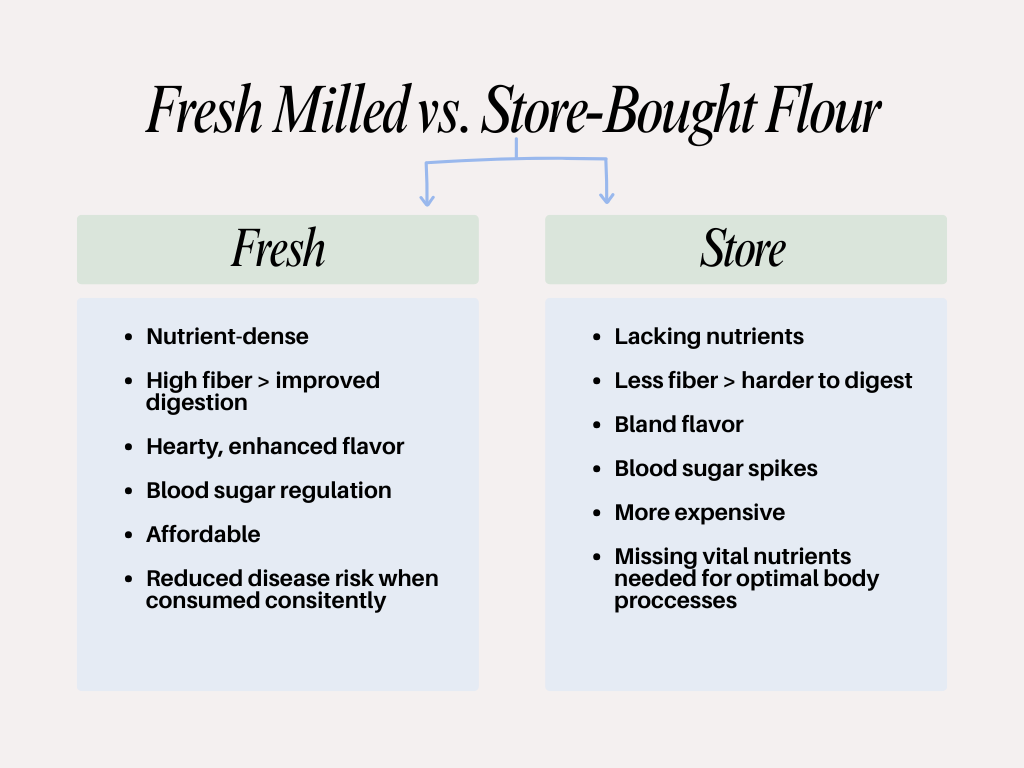
But, what nursing has taught me is that we should always ask the why behind the things we do. It has also helped me develop a love for charts, so here’s one I made for you. With something that is such a staple, shouldn’t we give it more thought?
About a year ago, I had a friend recommend this video to me, and so I added it to my list of things to research. When the time came for me to listen and dig into it a bit, I was amazed, and I think you will be too.
In this blog, I will share with you what you’ll want to know about the super food bread can be and how it can bless your life and your home. I’m a few months into this, so let’s learn together.
We’ll keep it simple and give you everything you need to get started.
What Is Fresh Milled Flour?
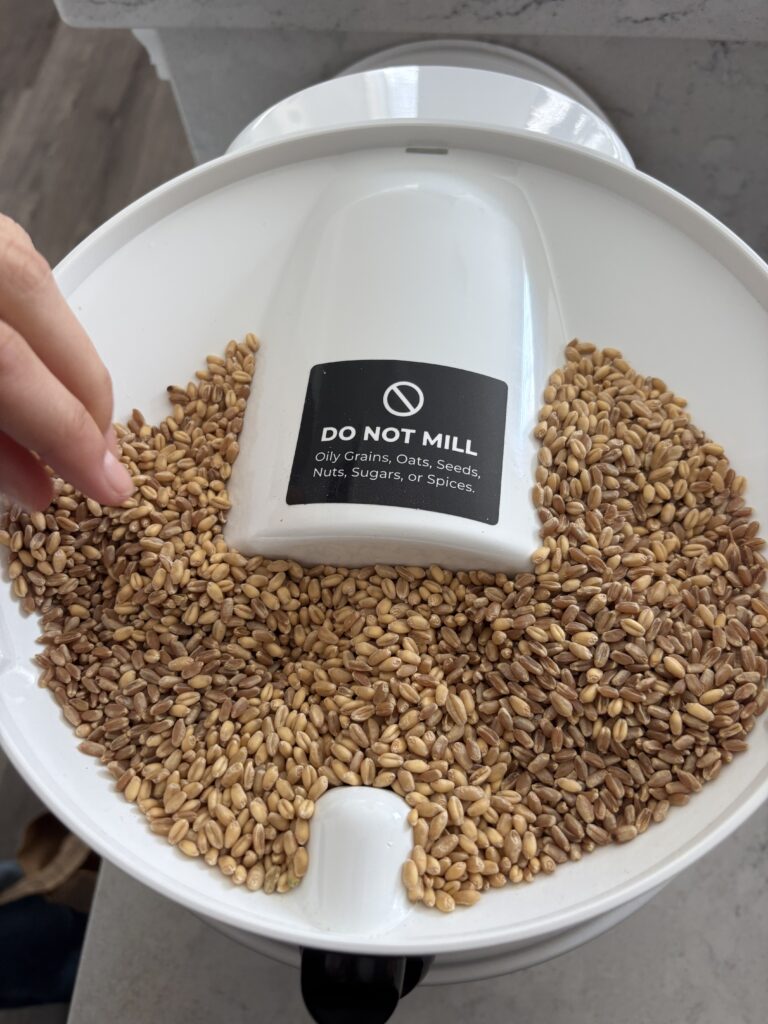
Simply put, fresh milled flour is flour you mill yourself. You start with the basic form—a wheat berry (kind of like a grain of dry rice) can be ground into a powder. This process has been going on for thousands of years and is a simple and effective way to get dozens of nutrients.
Why Fresh Milled Flour Is Different from Store-Bought Flour
Flour you and I typically buy in the stores undergoes this same process. The only difference is that flour actually dies. Think about an apple. When you leave it on the counter, it turns brown. A similar process is happening with the flour, but we just can’t see it. When this happens, it loses nearly all of its nutritional value and essentially becomes empty calories. Crazy, right? If you want a visual of the nutrient breakdown between fresh milled and store-bought flour (even whole wheat), this chart could help you!
The Truth About White Flour
It’s in everything, but what is it? Flour hasn’t always had that fresh white look to it. Naturally, it is more of a cream color. This only began in America in the late 1800s, when companies wanted a product with a longer shelf life (1). They did so by removing the wheat germ and bran, leaving the endosperm alone. To make it simple, this action pretty much stripped the flour of all of its nutrients, leaving it as merely empty calories.
Health Concerns With White Flour
This led to a variety of health issues across America due to nutrient deficiencies, notably anemia, neurological and psychological issues (2). To combat this, companies began to fortify their flour with those particular nutrients (like iron and other B vitamins), which is what we typically find today. However, this bread is still missing the things that make it a worthwhile food. Because elements are still missing, so are the health benefits. Thankfully, there is a better way.
The Health Benefits of Fresh Milled Flour
Fresh milled flour has so much to offer you and your family. Let’s break it down.
Why Freshly Milled Flour Retains More Nutrients
Because fresh milled flour contains all parts of the wheat berry, it maintains all of the nutrients (for a short period of time… more on this later in this post).
Understanding the Bran, Germ, and Endosperm
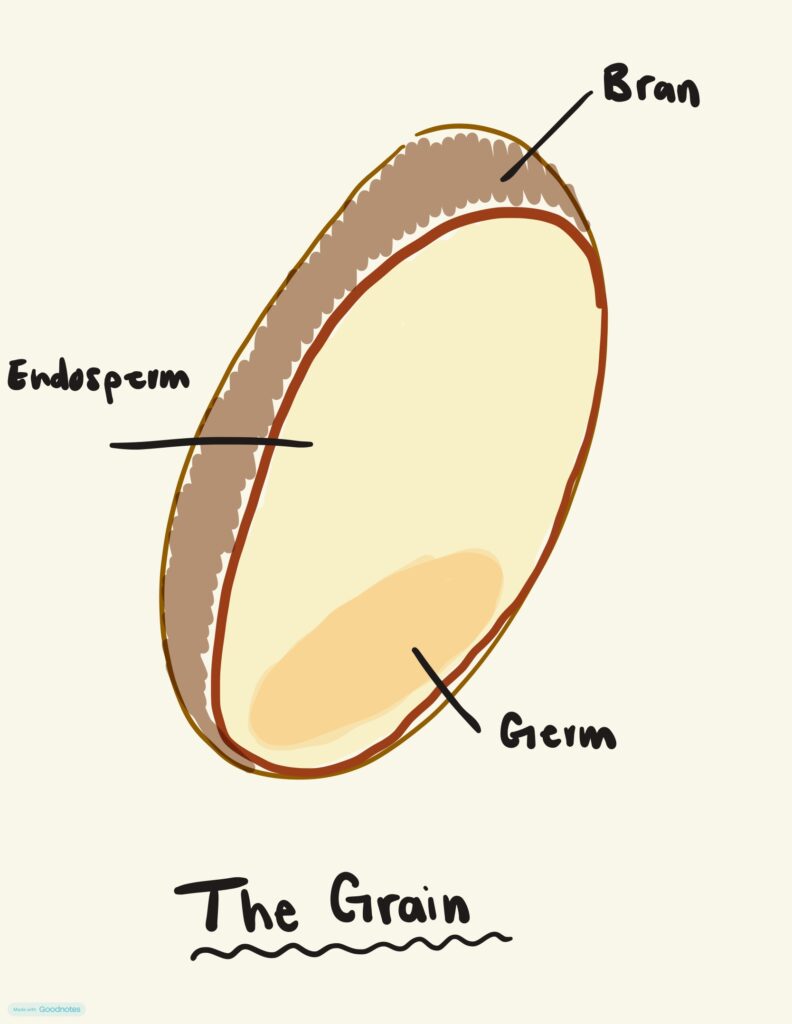
God created everything with a purpose, all the way down to the building blocks of wheat berries. Here is a great graphic breaking it down for you visual learners. It not only shows pictures of the berry but graphs regarding the nutrients lost.
- Bran: B vitamins, fiber, and antioxidants
- Germ: protein and carbohydrates
- Endosperm: essential fats, B vitamins, vitamin E (3)
Whole Grains and Everyday Nutrition
By including whole grains that are freshly milled into your diet, you are introducing an abundance of nutrients.
Diets rich in nutrients, fiber, and whole grains are often associated with improved health and decreased risk for chronic disease when incorporated consistently.
This healthy flour is full of nearly every nutrient our bodies need, aside from Vitamin D (from the sun), Vitamin C (think citrus fruits), Vitamin B₁₂ (many animal products), and Omega-3 fatty acids (fish, avocados) (4).
There are countless studies supporting the need for fresh milled flour, so you can pursue this with confidence. It’s not just a trend.
How Does Fresh Milled Flour Taste?
This question is one I’d love for you to discover on your own, but I’ll keep it simple with one word—hearty. Depending on the type of wheat berry you use, the taste will differ. The fun part is getting to experiment! Instead of feeling stuffed or bloated, my experience is feeling satisfied and full for longer.
What Types of Grains Are There?
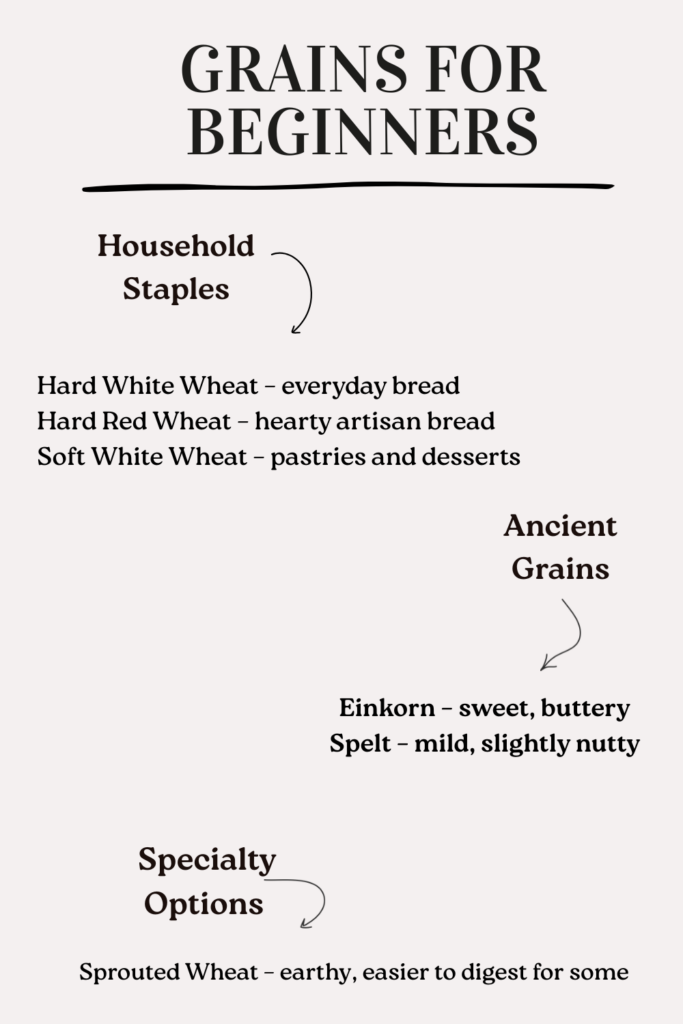
Again, this part is very fun. You can get into the weeds a little here, but here is a list of the most commonly used grains. In our house, we stock up on the hard red and hard white wheat berries. These are great options because you can use them for nearly everything and they are affordable.
🌾 Everyday Staples
- Hard White – daily
- Hard Red – hearty
- Soft White – pastries and desserts
🌾 Ancient Grains
- Einkorn – sweet
- Spelt – mild, nutty
🌾 Specialty Options
- Sprouted Wheat – earthy, easier to digest for some
Essential Equipment for Milling Fresh Flour
All of this information is great, but let me share with you how to practically implement it into your life. There are just two things you’ll need—a grain mill and wheat berries. There are some startup costs, but they can save you money in the long run—not only on bread but on your health!
Choosing a Grain Mill
This part is quite simple, but it does take patience due to most products requiring backorders. You can find great used mills on places like Facebook Marketplace or eBay. Here are some of the options I considered.
| Grain Mill | Best For | Price |
| NutriMill | Frequent Bakers | $$ |
| Mockmill | Frequent Bakers | $$$ |
| KitchenAid attachment | Budget option | $ |
Tips for Baking with Fresh Milled Flour
As I mentioned before, I am new to my home grain milling journey. These are the tips that got me off the ground, and they are sure to simplify this process for you.
- Only mill what you need, and try to use it right away (the quicker you use it, the more nutrients you will get!)
- Refrigerate or freeze any extra if you need to (can store in fridge for 1 month and freezer for 6 months to preserve nutrient value)
- Store wheat berries in 5 gallon buckets with a twist lid (they can last years!)
- Join a co-op like Azure Standard to buy your berries (order and pick up on the drop-off date… this is actually fun because there will likely be other fresh milled flour lovers getting their goods, too!)
- Recipe tips: decrease the amount of flour added by 2-3 tablespoons per cup of flour
When to Substitute Fresh Milled Flour
Fresh milled flour can be used for anything store-bought flour would be used in. Depending on the type of goodie you are making, you may want to swap the wheat berry you are working with. Soft white flour is the best for soft baked goods.
Best Recipes for Beginners
Possibilities are endless when it comes to fresh milled flour. Our staples are:
How to Store Wheat Berries
Storage is simple and only requires a cool, dry place and an airtight container.
If you are storing wheat berries in bulk, 5 gallon buckets are best.
If you are just starting out, storing a smaller amount in any airtight container will do. Here is a great resource if you would like more details.
Where to Get Fresh Milled Flour
To get fresh milled flour, you need fresh ground wheat. It all starts with with the berries! The most affordable way to do this that I have found is through Azure Standard. If you are starting out and want to try a variety of wheat berries before committing to multiple pounds, places like Thrive Market or Amazon also have smaller quantities available, but they do come with a higher price point per ounce. Here is a starter kit.
Frequently Asked Questions
Is fresh milled flour healthier than store-bought flour?
- Yes! When used properly, it contains many vitamins and minerals that store-bought flour is missing.
How long does fresh milled flour last?
- Once milled, it can last a few days in fridge and up to six months in the freezer.
Which wheat berry should beginners buy?
- Hard white wheat berries are a great place to start since they can be used in most things.
Do I need an expensive grain mill?
- Nope! Grain mill attachments or second hand mills are great options. Mills can be expensive, however, an investment in the health of you and your family is one to consider.
Is Fresh Milled Flour Worth It?
Milling our flour at home has changed the way our family views bread. Food is designed by God to nourish, energize, and bring people together. With fresh milled flour, you can confidently accomplish this mission.
Whether your goal is to improve your health, try new health recipes, or simply become more intentional about feeding your loved ones, home grain milling is a rewarding place to begin.
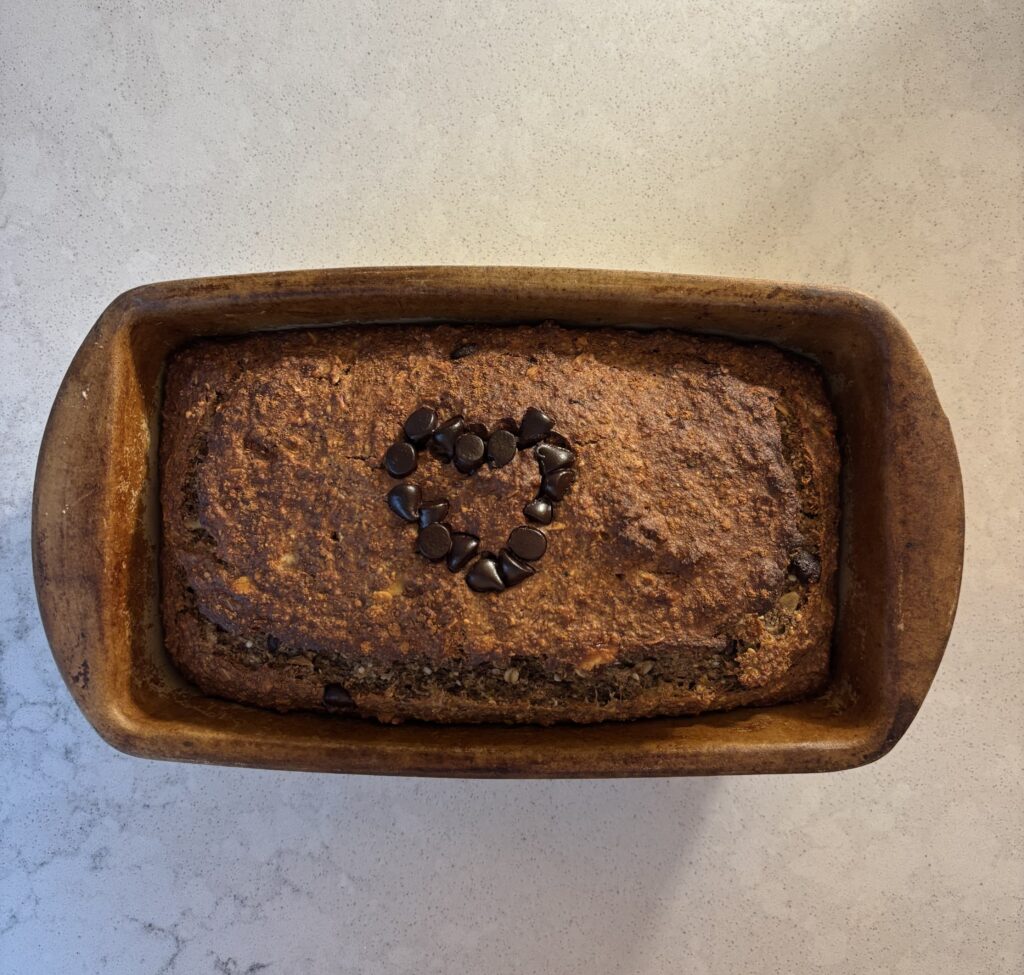
If you’re ready to bake with fresh milled flour, start with my The Best Healthy Fresh Milled Flour Banana Bread. It’s great for beginners (like myself) and one of the tastiest ways to experience the difference fresh flour makes.
Please let me know if you give it a try! Yay for bread!
Resources
