Healthy Grocery List for Two: Easy, Nutritious & Affordable
Hello, friends!
I don’t know about you, but I love learning from the rhythms and routines of the people around me. One of the most helpful things I’ve learned from others is how they approach grocery shopping.
It’s easy to get into a routine of buying the same groceries week after week and miss out on new foods to try or nutritious staples to keep on hand.
Today, I’m sharing our healthy grocery list for two! Our list changes from week to week, but these are some of our go-to foods, where we like to shop, and a few tips we’ve picked up along the way.
Whether you’re shopping for two or simply looking for inspiration for your next grocery trip, I hope this list gives you a helpful place to start.
“So, whether you eat or drink, or whatever you do, do all to the glory of God” (1 Corinthians 10:31)
A Healthy Grocery List for Two: Easy, Nutritious & Affordable
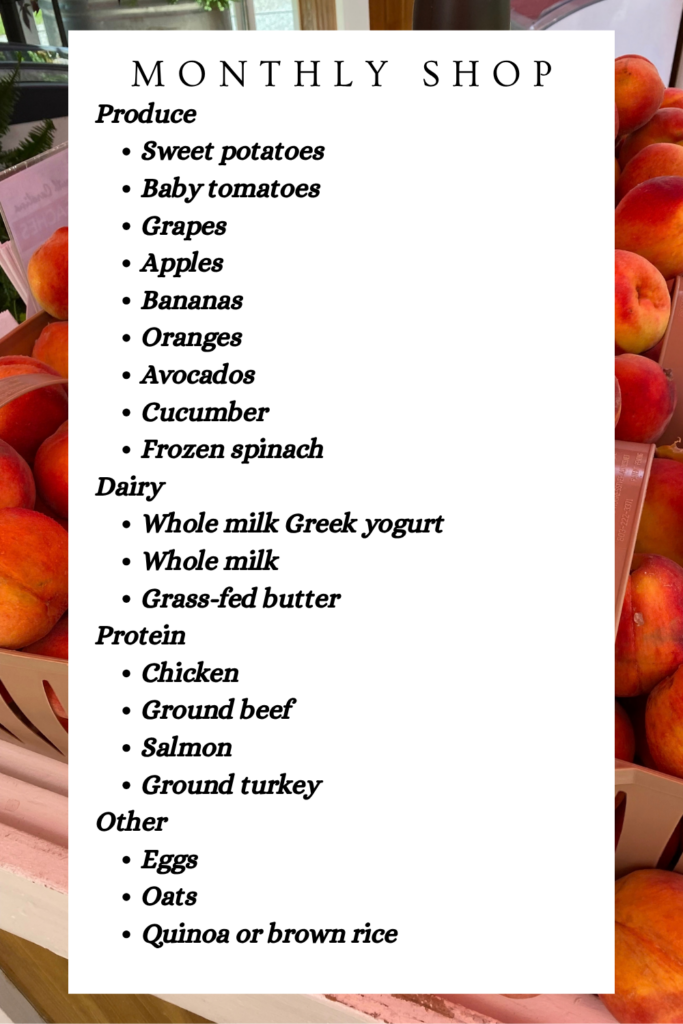
Weekly Shop
Produce
- Sweet potatoes
- Baby tomatoes
- Grapes
- Apples
- Bananas
- Oranges
- Avocados
- Cucumber
- Frozen spinach
Dairy
- Whole milk Greek yogurt
- Whole milk
- Grass-fed butter
Other
- Eggs
- Oats
Bulk Shop
Azure Standard
- Hard white wheat berries (25 lbs)
- Hard red wheat berries (25 lbs)
- Raw, unfiltered honey x3
- Diced tomatoes x10
- Salt
Costco
Protein
- Organic chicken
- Grass-fed ground beef
- Wild-caught salmon
Produce
- Frozen fruits
- Frozen veggies
Supplements
- Creatine
- Collagen
Other
- Avocado oil
- Nuts, seeds, and nut butters
- Quinoa or brown rice
Healthy + Affordable Places to Shop
Depending on where you live, the shopping options will differ.
Aldi and Walmart
- Great for weekly staples, like dairy products, fresh produce, and eggs
Costco
- Ideal for stocking up on meats (e.g., organic chicken, grass-fed beef, wild-caught salmon, etc.), peanut butter, olive and avocado oil, collagen, creatine, frozen fruits and vegetables, eggs
Azure Standard
- Best choice for wheat berries, canned goods, raw honey, seeds, cocoa powder, etc.
Farmers Markets
- Local produce (which can be more nutritious since the fruit often ripens on the vine and are sold shortly after, retaining more of the goodness!)
Things to Keep in Mind When Grocery Shopping
There are some tips and tricks when it comes to grocery shopping. Here are some of the tips I’ve picked up thus far:
- Create a list + stick with it
- Shop the borders of the store: fresh produce, dairy, meat, etc.
- Buy in bulk when you can (especially pantry staples and freezer-friendly foods)
- Remember the “Dirty Dozen” and “Clean 15” when choosing between organic or non-organic foods
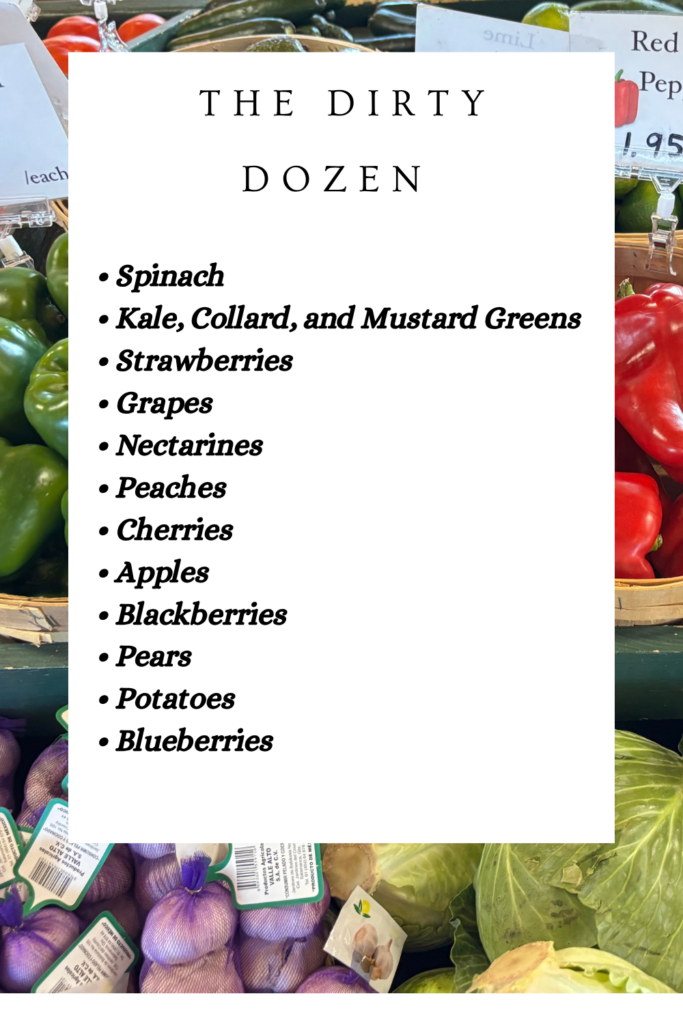
The Dirty Dozen
You may have heard of the “Dirty Dozen,” but what is it?
This is a group of fruits and vegetables that ranked the highest in pesticide residues (as noted by the Environmental Working Group).
Why does this matter?
Essentially, pesticides are chemicals farmers use to support the production of their crops.
These chemicals, however, can be toxic to humans.
For example, the nervous system, endocrine system, fertility, and our very DNA can be negatively affected by pesticides.
We cannot completely eliminate our exposure to pesticides, we can take small steps to limit our exposure by buying these products organically when we can.
Fruits and vegetables are still nutritious choices, regardless of their source.
Washing produce under running water and drying with paper towels are recommended.
Now, to the list:
• Spinach (highest residue by weight)
• Kale, Collard, and Mustard Greens
• Strawberries
• Grapes
• Nectarines
• Peaches
• Cherries
• Apples
• Blackberries
• Pears
• Potatoes
• Blueberries
The Clean 15
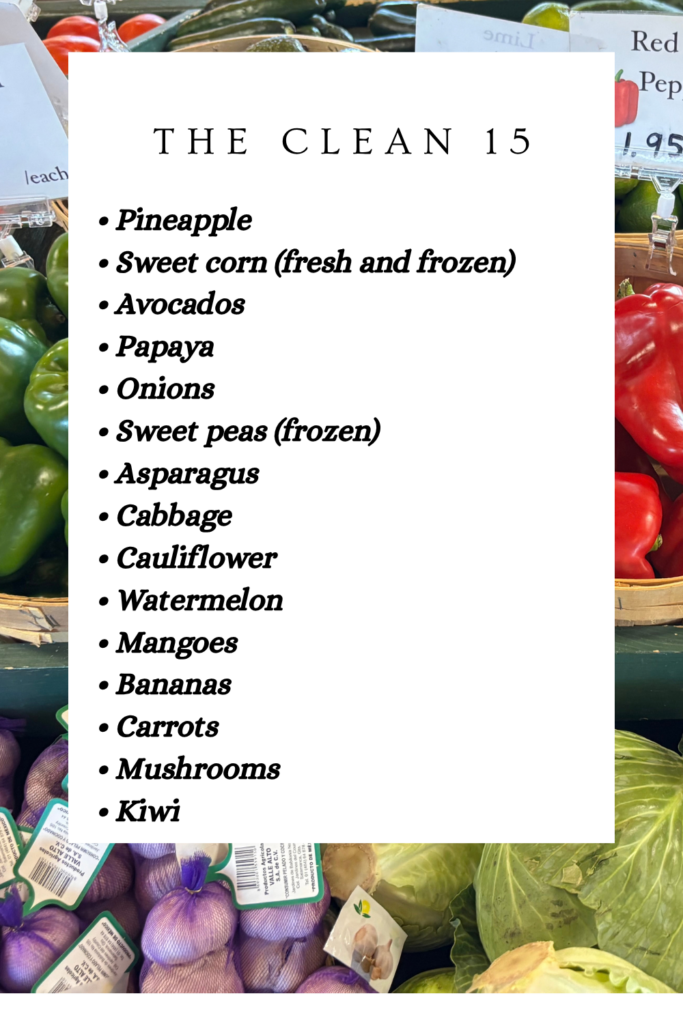
The Clean 15, on the other hand, are a group of fruits and vegetables that have the lowest pesticide residue.
In other words, these are not your priority items when buying organic.
• Pineapple
• Sweet corn (fresh and frozen)
• Avocados
• Papaya
• Onions
• Sweet peas (frozen)
• Asparagus
• Cabbage
• Cauliflower
• Watermelon
• Mangoes
• Bananas
• Carrots
• Mushrooms
• Kiwi
A Note About These Lists
While these lists can be a good guide, there is—of course—some criticism.
Critics argue that the list lacks what the specific health risks or toxicity levels are and instead simply notes the presence of pesticides.
It’s also important to note that most produce has levels of pesticides that fit within the U.S. governmental safety limits.
So, when it comes to buying organic, these are just a few things to keep in mind.
We don’t have to make choices out of fear but with intention and gratitude.
The choice is a gift in itself.
Nutrient-Rich Foods to Try
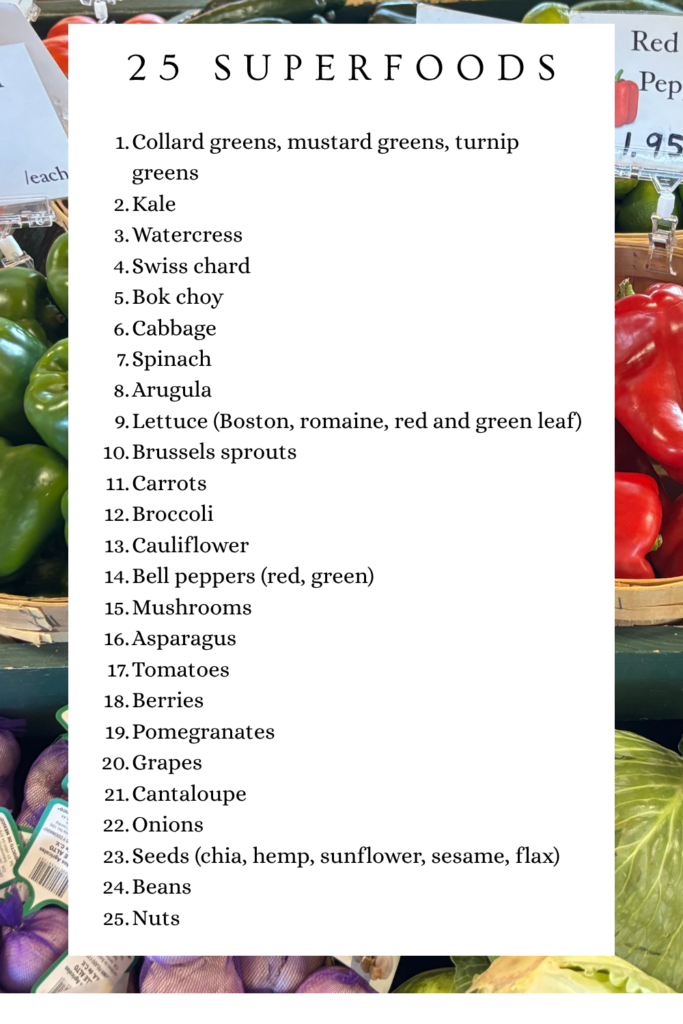
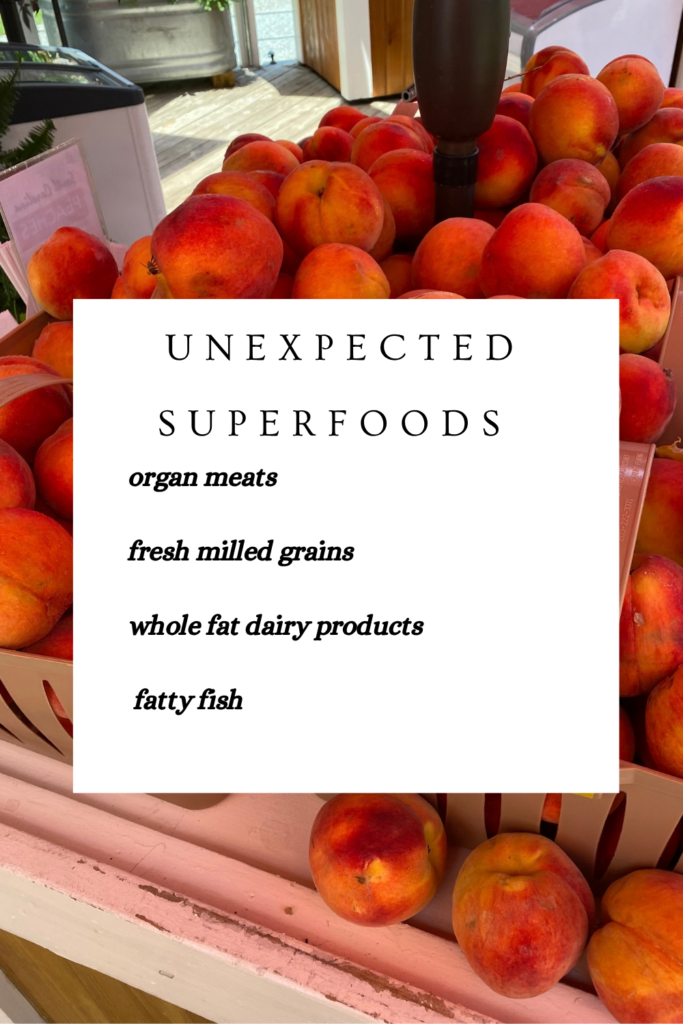
After reading some resources regarding fertility and pregnancy, I came across this list of the top 25 superfoods. This is by no means a complete list, but there were some nutritious foods on there that we hope to try, and maybe you will, too!
For more info on fresh milled flour, check out my post here.
Final Thoughts
I hope this healthy grocery list for two gives you some inspiration for your next grocery trip!
Healthy eating doesn’t have to mean buying every product labeled organic, purchasing expensive supplements, or filling your cart with every superfood. It all starts with simple, nourishing foods that work for your family and your budget.
Grocery lists change with the seasons, needs, and what we have on hand.
My encouragement is to find a rhythm that works for you and try new foods when you can.
What are some of your favorite healthy grocery staples? I’d love to hear what you keep on your list!
Happy grocery shopping!
All glory to God!
